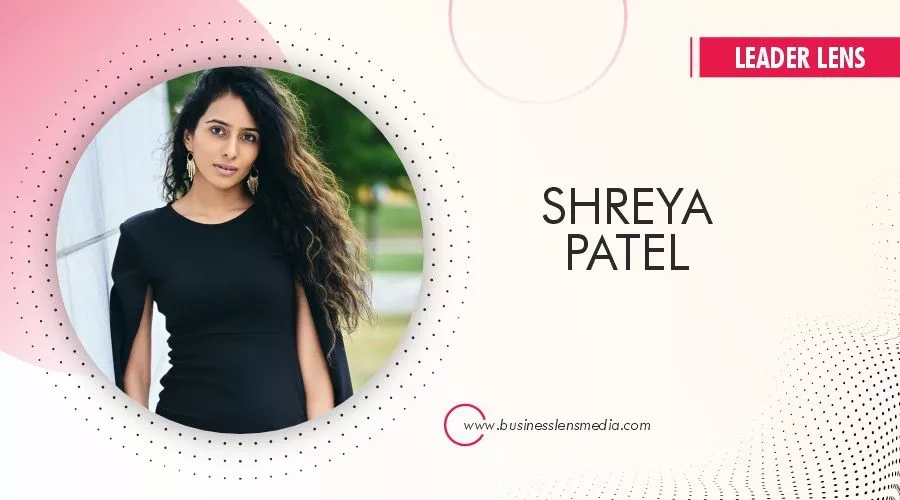
Shreya Patel is a multidisciplinary media visionary, producer, writer, actress, filmmaker, and international speaker recognized for driving impact through media and storytelling. A Forbes 30 Under 30 honoree in Media and one of Canada’s Top 100 Most Powerful Women in Arts, Sports, and Entertainment, she has also been acknowledged as an Emerging Leader Under 35 and an Impact Female Entrepreneur to Watch.
Patel is the founder behind projects that challenge narratives and elevate underrepresented voices. She produced the multiple-award-winning, Oscar-qualifying, and Canadian Screen Award-qualifying short film Unibrow.
Her directorial documentary debut, Girl Up, which sheds light on domestic human trafficking, partnered with the Toronto International Film Festival and the Civic Action Summit. Her production company is behind the Canadian Screen Award–nominated Get Up, Aisha.
Her music video directorial debut, Freedom Dance, featuring personalities from over seven countries, has gone viral and surpassed 1.2 million views on YouTube. In response to the COVID-19 pandemic, she gathered people across 66 countries to create Unity – #LOVESPREADS Faster Than Virus, the closing film of the Munich Film Festival.
A graduate of the Second City Conservatory, she has performed in award-winning independent films and theatre productions, with Strangers In A Room earning the Audience Choice Award at the 23rd Reelworld International Film Festival.
As a model, she has walked runways across Asia, the Middle East, and North America, with features in Vogue India, Grazia India, and campaigns for globally recognized brands including Ritu Kumar, Mani Jassal, McDonald’s, Rogers Cup, Vodafone, and more showcasing her success across major fashion and entertainment markets.
Patel is also a sought-after speaker, sharing insights on creative entrepreneurship, gender equity, mental health advocacy, and social impact at Forbes Under 30 events in Botswana and the USA, film and advocacy forums in Germany, academic conferences in Slovenia, social impact and media platforms in Canada, representation panels in India, as well as leadership events across North America.
Her continued advocacy includes her long-standing involvement in the Canadian Screen Award-winning “Bell Let’s Talk” campaign and recognition from Global Affairs Canada for her mental health leadership.
Why Human Emotion Will Always Direct the Story
As a multidisciplinary media entrepreneur, storyteller, and Forbes 30 Under 30 honoree, here’s what I know: technology will get your story in front of millions, but emotion is what makes them care.
From producing Oscar-qualifying short film to directing documentaries that sparked national conversations, I’ve witnessed firsthand how stories don’t just inform…they transform. And in an era where artificial intelligence dominates industry conversations, we’re asking the wrong question. It’s not whether AI will replace storytellers. It’s whether we’ll remember what makes stories worth telling in the first place.
The entertainment and media landscape is experiencing rapid disruption. AI can now generate scripts, edit footage, compose music, and even create synthetic actors. Studios are reducing budgets, streamlining production timelines, and exploring automation at every turn. The fear is palpable. But here’s what the conversation consistently misses: AI doesn’t understand what it means to lose someone you love. It doesn’t know the specific ache of betrayal, the quiet dignity of forgiveness, or the complicated joy of reconnecting with someone after years of silence.
When I produced “Unibrow,” a film exploring identity and belonging, or directed “Girl Up,” a documentary that entered the conversation as Bill C-36 moved through Parliament, the impact wasn’t in the technical execution; it was in the vulnerability we captured. The moments that legislation couldn’t articulate, but audiences could feel. Those weren’t manufactured; they were excavated from real human experience, shaped by empathy, intuition, and the messy complexity of being alive.
AI operates on pattern recognition. It analyzes millions of data points to predict what should happen next in a narrative. But groundbreaking storytelling doesn’t follow predictions. It follows the truth. The truth of who these characters are, what they’ve survived, and what they’re willing to risk. It’s about the choice a filmmaker makes to linger on a face for three extra seconds because something unspoken is happening there. It’s about knowing when to break the formula because real life doesn’t follow algorithms.
We’re competing with the wrong opponent. AI’s efficiency isn’t the threat, but our willingness to surrender creative authority is. As leaders in entertainment, business, and innovation, our responsibility isn’t to match AI’s speed. It’s to double down on our irreplaceable advantage: our humanity. The industry doesn’t need more content; it needs more courage, the kind that tells stories outside neat market categories, invests in emerging voices that haven’t been algorithmically validated, and lets projects breathe organically instead of forcing them through AI-optimized production pipelines.
I’ve spoken on stages across continents about entrepreneurship and media innovation, and the question I’m asked most frequently is how to stay relevant as technology advances. My answer remains consistent: become more human, not less. Study psychology, not just analytics. Understand cultural nuance, not just demographic data. Develop your instinct for what resonates, not just what performs.
The future belongs to hybrid creators…those who leverage AI’s capabilities while maintaining absolute authority over emotional truth. Use AI to handle logistics, streamline workflows, and enhance production value. But never outsource the soul of your story. Never let an algorithm decide what matters.
As we navigate this transformation, remember: audiences don’t remember impressive CGI or flawless editing. They remember how you made them feel. That has always been our competitive advantage. And it’s the one thing no machine will ever replicate.
We’re at a crossroads. AI will change storytelling, that’s certain. What we decide is whether we let it strip away what makes stories human.