In an industry where innovation moves at the speed of culture, growth is rarely accidental. It is engineered at the intersection of insight, infrastructure, and intent. The most influential marketing leaders today are not simply amplifying brand stories; they are shaping ecosystems that allow entire communities to scale. Within the rapidly evolving gaming economy, where distribution models shift, player behavior evolves, and monetization strategies redefine themselves, true impact lies in building systems that empower others to succeed. Strategic clarity, when combined with operational depth, becomes a multiplier not only for revenue but for relevance.
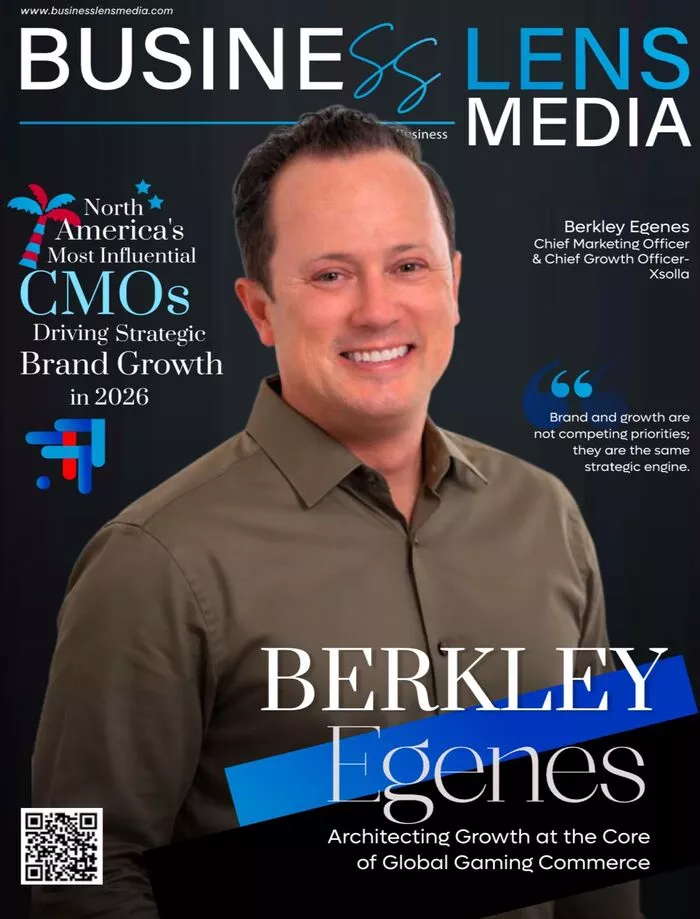
As Chief Marketing Officer & Chief Growth Officer at Xsolla, Berkley Egenes operates precisely at this convergence point. His career, spanning global enterprise brands and the dynamic world of interactive entertainment, reflects a consistent belief: brand is not decoration; it is architecture. At Xsolla, a company powering commerce infrastructure for game developers worldwide, he has championed an integrated approach where marketing, product, partnerships, and revenue strategy function as one cohesive engine. Rather than positioning growth and storytelling as competing priorities, he has aligned them, transforming narrative into measurable business expansion and insight into strategic advantage.
Under his leadership, education-driven thought leadership, platform integration, and developer-centric innovation have strengthened Xsolla’s standing within the global gaming ecosystem. By focusing on long-term trust over short-term noise, he exemplifies a new era of marketing leadership, one where enabling others to scale is the ultimate growth strategy.
Discover how his vision is reshaping commerce for the next generation of game creators.
From Brand Foundations to Gaming Infrastructure
Over two decades, Berkley’s career has spanned global brand marketing, strategic partnerships, and revenue growth. The defining moments that shaped his trajectory were those that expanded his understanding of how brand architecture directly influences business performance.
Early in his career, working with Fortune 500 companies such as Kellogg’s, AB-InBev, and IBM, he observed how strong brand positioning creates commercial leverage. Effective brand work, he learned, simplifies sales conversations, strengthens partnerships, and lowers customer acquisition costs. These experiences established his understanding of brand at scale not as aesthetic expression, but as a structural driver of enterprise value.
His transition into gaming through Ghost Gaming introduced an entirely different operating environment. Interactive entertainment demands earned relevance. Gaming audiences are highly engaged, deeply informed, and quick to respond to inauthentic messaging. In this space, cultural fluency and community trust are paramount. Berkley found himself energized by the challenge of building brand equity in a sector where authenticity is scrutinized, and value must be demonstrated continuously.
When he joined Xsolla in early 2020, he was drawn to an opportunity that extended beyond marketing a consumer-facing brand. Xsolla operates at the infrastructure layer of the gaming industry, empowering developers to distribute and monetize globally without limitation. For Berkley, marketing an enabling platform presented a different kind of fulfillment; success could be measured through the achievements of thousands of developers supported by the company’s technology.
In 2024, he assumed the combined roles of Chief Marketing Officer and Chief Growth Officer. The integration was deliberate. Growth, in his view, is the natural outcome of marketing, product, partnerships, and operations functioning as a unified system. By aligning brand narrative, demand generation, and revenue optimization under a single strategic lens, Xsolla has been able to reinforce value continuously for its developer community.
Where Brand Narrative Meets Revenue Engine
Within the highly dynamic video game ecosystem, Berkley rejects the notion that brand storytelling and revenue growth exist in tension. “Brand storytelling and revenue growth are natural partners,” he explains. When executed with clarity, they become expressions of the same strategic intent.
In gaming, messaging cannot operate independently from tangible value. Developers choose Xsolla not because of compelling language, but because it addresses complex challenges: global payment acceptance, tax compliance, fraud prevention, and direct-to-consumer monetization. Storytelling at Xsolla focuses on articulating demand already present within the market, helping developers identify friction points and understand how modern commerce infrastructure resolves them.
This philosophy informs the company’s content strategy, which prioritizes education over promotion. Xsolla’s quarterly State of Play reports provide data-driven insights into player behavior, monetization trends, and regional market dynamics. These publications serve the broader developer ecosystem, regardless of customer status, positioning Xsolla as a knowledge partner first and a vendor second.
Growth at the platform level unfolds along two dimensions. First, expanding the developer base by ensuring Xsolla is included in commerce infrastructure evaluations. Second, deepening engagement through product adoption. A developer may begin with payment processing and later implement Web Shop for direct sales or LiveOps Management for seasonal campaigns. Brand authority supports this expansion by fostering trust before purchase decisions are made.
The constant evolution of the gaming ecosystem, platform policy changes, new monetization models, and emerging markets creates sustained demand for clarity. By serving as a source of insight during industry shifts, Xsolla strengthens both brand credibility and inbound growth simultaneously.
Integrating Distribution, Marketing, and Monetization
Xsolla operates at the intersection of distribution, marketing, and monetization functions that often appear fragmented in traditional vendor relationships. Berkley describes his role as one of translation and integration.
The company’s portfolio spans global payment processing, web-based storefronts, launcher technology, publishing infrastructure, marketing tools, fraud prevention, and funding programs. Each addresses a specific technical challenge. Yet presenting them as isolated solutions places integration burdens on developers.
Berkley’s objective is to establish a coherent growth narrative: Xsolla as a unified commerce infrastructure that scales alongside developers. Distribution, marketing, and monetization are not separate workstreams; they are interconnected elements of a developer’s commercial strategy.
He often illustrates this through the journey of an indie studio. A team may launch on Steam with traditional in-game purchases. As traction grows, they seek to establish a direct-to-consumer web store, improve marketing attribution, expand into mobile without fragmenting the in-game economy, and experiment with battle passes or other monetization models. Approached through separate vendors, these initiatives create data silos, engineering complexity, and inconsistent player experiences.
When integrated within a single infrastructure, the equation changes. A Web Shop built on the same payment system shares wallets, purchase history, and fraud detection capabilities. Marketing attribution aligns revenue data across web and mobile environments. Engineering investments compound rather than fragment.
The result is operational coherence and strategic flexibility.
Data, Creativity, and Hypothesis-Led Growth
In an industry deeply influenced by analytics, Berkley approaches data not as a constraint on creativity but as a framework for exploration. Data reveals patterns, quantifies outcomes, and identifies anomalies. It clarifies what happened and often why. However, it does not independently generate hypotheses about what should happen next.
Creative exploration fills that space.
Berkley uses data to define problems with precision. Performance analysis of Web Shop implementations across regions and genres may reveal variation in conversion rates tied to payment method availability. Such insight identifies opportunity zones, but it does not prescribe a creative solution.
The development of Offerwall, a feature allowing non-paying players to earn in-game currency through engagement, emerged from understanding player psychology rather than extrapolating from existing metrics. Data validated the hypothesis post-launch, but creativity generated it.
He values organizations that combine rigorous measurement with imaginative experimentation. While initiatives are launched with defined success metrics and leading indicators, they are not confined by historical precedent. Growth emerges from disciplined experimentation.
Navigating Complexity in Gaming and Esports
Among the most complex challenges Berkley has faced is positioning Xsolla within an evolving market. The concept of ‘commerce infrastructure for games’ required reframing how developers thought about monetization. Commerce architecture influences player lifetime value, international expansion capability, and long-term business flexibility. It is strategic.
This realization prompted a shift toward education-first marketing. By investing in thought leadership and industry frameworks, particularly around platform policy shifts and emerging payment trends, Xsolla positioned itself as a resource for strategic clarity.
Serving the diversity of the gaming ecosystem also required thoughtful segmentation. Studios range from agile indie teams to multinational publishers. Decision-makers may be founders, engineers, or CFOs. Rather than segmenting by size alone, Xsolla refined its approach around business maturity and strategic objectives, ensuring developers receive relevant guidance at appropriate stages of growth.
These experiences reinforced Berkley’s emphasis on understanding customers beyond demographics, examining evolving goals, constraints, and operational realities.
Innovation, AI, and Market Relevance
Technological waves, such as VR, blockchain, NFTs, metaverse concepts, and generative AI, cycle rapidly through gaming discourse. Berkley evaluates innovation through three criteria:
- Does it solve existing developer problems?
- Does it unlock previously inaccessible capabilities?
- Does it align with genuine shifts in player behavior?
Machine learning has proven effective in fraud detection, where evolving fraud patterns require adaptive systems. The application delivers measurable impact, reduced revenue loss, improved transaction approval rates, and lower operational costs.
Generative AI is approached with measured experimentation. While promising in content creation and tooling, deployment follows demonstrated value, particularly around intellectual property considerations and quality control.
Xsolla’s infrastructure is designed for flexibility, supporting subscriptions, virtual currencies, and emerging monetization models. In Berkeley’s view, “Brand relevance arises from enabling developers to navigate change confidently rather than chasing technological headlines.”
Trust, Partnerships, and Scalable Relationships
Sustainable partnerships are grounded in mutual value creation over time. With developers, Xsolla adopts a service mindset. Revenue alignment supports partnership, but trust is built through responsiveness, transparency, and honesty about fit.
Berkley emphasizes frontloading investment during evaluation stages, technical consultations, integration planning, and proactive identification of challenges before commercial commitment.
Platform and technology partnerships rely on role clarity. Collaborations with attribution providers such as AppsFlyer, Adjust, Singular, and Airbridge integrate complementary strengths rather than overlapping capabilities.
Transparency during friction, psychological safety in dialogue, and operational integration beyond individual executive relationships ensure scalability.
Long-term thinking remains central. Short-term revenue optimization rarely outweighs durable trust.
Milestones That Reflect Impact
Joining Xsolla during the pandemic in 2020 required balancing extraordinary industry growth with operational stability. Gaming demand accelerated globally. Ensuring infrastructure reliability, customer support expansion, and brand clarity during rapid scale was critical.
The successful navigation of that period reinforced Berkley’s conviction that sustainable growth depends on operational excellence and authentic relationship investment.
Assuming the combined CMO and CGO role in 2024 marked formal recognition of marketing and growth as an interconnected system. Thought leadership initiatives such as the State of Play reports further solidified Xsolla’s role as a knowledge partner.
For Berkley, meaningful milestones are measured not by awards but by developer trust, continued adoption, product expansion, and recommendations across the community.
Sustainability Over Equilibrium
Leading global teams across time zones demands sustainable practices rather than rigid equilibrium. Berkley prioritizes operational rhythms, autonomous team culture, and deliberate reflection time.
Physical health and exercise remain foundational. Strategic thinking blocks are protected. Asynchronous collaboration often proves more effective than forced real-time coordination.
He views sustainable performance as superior to short-term intensity. Sustainable excellence compounds.
Looking Toward 2026 and Beyond
The coming years will redefine distribution, monetization, and player experience. Direct-to-consumer commerce will expand as developers seek greater control. Emerging markets across Southeast Asia, Latin America, the Middle East, and Africa represent the next billion gamers.
Xsolla’s strategy centers on building localized infrastructure, compliance frameworks, and payment partnerships that enable global expansion without commerce reconstruction.
Berkley’s brand objective is clear: Position Xsolla as the definitive commerce infrastructure partner for developers who view monetization as strategic.
For emerging marketing leaders, he offers direct counsel:
- Immerse yourself in games and developer realities
- Prioritize learning over titles
- Combine analytical rigor with creativity
- Build genuine relationships
- Remain adaptable in a fast-moving ecosystem
- Maintain curiosity across disciplines.
The gaming industry rewards those who blend strategic thinking with authentic engagement. For Berkley, “Supporting developers operating at the edge of creativity and commerce remains one of the most compelling challenges in modern marketing leadership.”