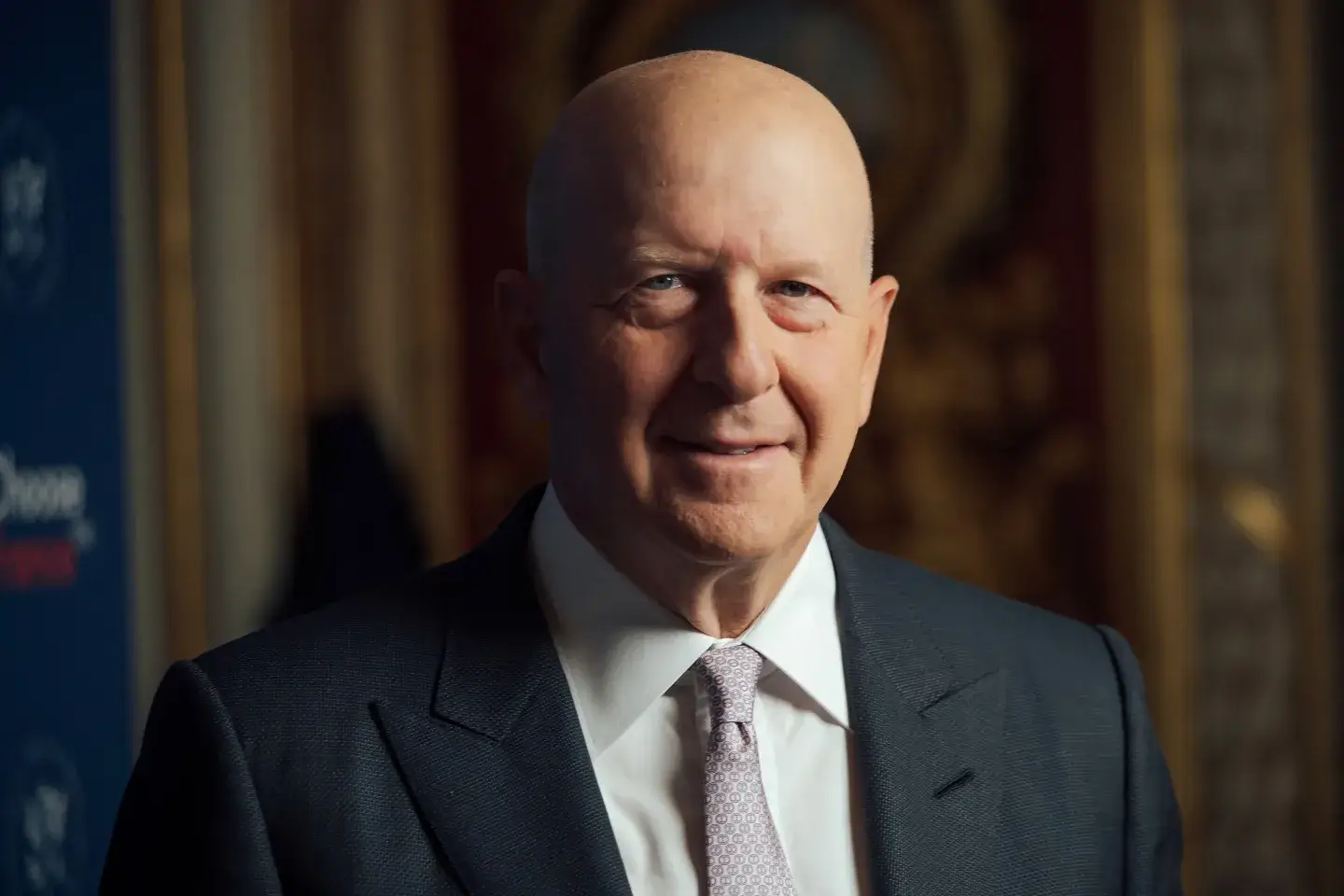
When people search for David M. Solomon’s net worth, they are rarely satisfied with a single number. What they are really asking, sometimes consciously, sometimes not, is how power, money, and leadership converge at the very top of global finance. They want to know what kind of decisions shape that wealth, what kind of pressure comes with it, and what kind of person stands behind it.
David M. Solomon, the CEO of Goldman Sachs, occupies a rare position in the modern corporate world. He leads one of the most influential financial institutions on the planet at a time when Wall Street itself is being questioned, reshaped, and redefined. His net worth is not the result of a single breakthrough moment or a dramatic entrepreneurial exit. It is the outcome of decades spent inside the system earning trust, navigating crises, and making choices that ripple far beyond balance sheets.
This is not simply a story about money. It is a story about endurance, institutional power, and the long, often invisible journey that builds both.
Understanding David M. Solomon Beyond the Title
David M. Solomon did not arrive at the helm of Goldman Sachs by accident, nor did he inherit his position through legacy alone. Born in New York in 1962, Solomon grew up in an environment that valued education, discipline, and ambition, but his path was shaped more by persistence than privilege.
He attended Hamilton College, where he studied political science, an academic background that might seem distant from high finance, yet proved quietly powerful. Political science trains the mind to understand systems, power structures, negotiation, and human behavior. These skills would later become central to Solomon’s effectiveness as a banker and leader, especially in an industry where numbers alone rarely tell the full story.
Long before he was a CEO, Solomon was learning how institutions move, how influence is earned, and how decisions made behind closed doors shape outcomes on a global scale.
Early Career: Learning the Hard Edges of Wall Street
David Solomon’s early professional years were spent at firms like Drexel Burnham Lambert and Bear Stearns, names that still echo through Wall Street history for their intensity, ambition, and eventual downfall. These environments were unforgiving, fast-paced, and deeply competitive. They offered young bankers a front-row seat to both extraordinary success and spectacular collapse.
This period of Solomon’s career is often overlooked, but it played a crucial role in shaping his risk awareness. He witnessed firsthand how aggressive financial strategies could generate immense short-term profits while quietly building long-term fragility. That experience left an imprint. It taught him that survival in finance is not just about intelligence or boldness, but about judgment, knowing when to push and when to restrain.
These lessons would later inform his leadership philosophy at Goldman Sachs, particularly during moments of economic uncertainty.
Joining Goldman Sachs: A Defining Shift
When David Solomon joined Goldman Sachs in 1999, he entered an institution known for its demanding culture and exceptional standards. Goldman was not simply a bank; it was a proving ground. Advancement depended on performance, credibility, and the ability to earn the confidence of peers who were often just as capable and driven.
Solomon progressed steadily. He became a partner within a year, a significant achievement that signaled the firm’s belief in his potential. Over time, he took on increasingly complex leadership roles, eventually running the investment banking division. In this position, he oversaw some of the firm’s most critical relationships and transactions, further solidifying his reputation as a steady, thoughtful operator.
By the time he was appointed co-president in 2016 and then CEO in 2018, Solomon was not an outsider brought in to shake things up. He was an insider who understood the institution from the inside out and who was trusted to guide it through change.
David M. Solomon Net Worth: Looking Beyond the Headline Figure
Today, David M. Solomon’s net worth is widely estimated to fall between $200 million and $250 million. While the exact number fluctuates with market conditions, this range reflects a consensus drawn from public disclosures, executive compensation reports, and long-term equity holdings.
What is important to understand is how this wealth is structured. Solomon’s net worth is not sitting in a single account or tied to speculative ventures. A significant portion of it is embedded in Goldman Sachs stock, restricted equity awards, and deferred compensation plans. In other words, his financial future is deeply intertwined with the long-term performance and reputation of the firm he leads.
This alignment is intentional. It ensures that his incentives mirror those of shareholders and reinforces a leadership model built on stewardship rather than short-term gain.
How His Compensation Really Works
As CEO of Goldman Sachs, David Solomon’s compensation is designed to reward performance over time, not instant results. While headlines often focus on annual pay figures sometimes exceeding $30 million in strong years, the structure behind those numbers tells a more nuanced story.
A relatively modest base salary forms the foundation, but the majority of his compensation comes from bonuses and equity awards that vest over several years. These awards are tied to metrics such as firm profitability, risk management, and shareholder returns. If Goldman Sachs underperforms, Solomon feels the impact directly.
This model reflects a broader shift in executive compensation across major financial institutions. It acknowledges that leadership decisions often take years to reveal their full consequences, and it encourages CEOs to think in terms of legacy rather than quarterly wins.
Leadership in a Time of Scrutiny
When Solomon became CEO in 2018, he stepped into the role during a period of profound transformation. Wall Street was under intense public scrutiny. Employees were questioning traditional work cultures. Technology was reshaping finance. Regulators were watching closely.
Solomon did not attempt to shield Goldman Sachs from these pressures. Instead, he engaged with them sometimes openly, sometimes controversially. He spoke publicly about the need to modernize work practices, address burnout, and adapt to changing expectations, even as he defended the firm’s high-performance culture.
Not all of these efforts were immediately successful, and some drew criticism from both employees and shareholders. Yet his willingness to confront uncomfortable realities rather than ignore them became a defining feature of his tenure.
Criticism, Compensation Debates, and Public Pressure
As with any high-profile CEO, David Solomon’s compensation and leadership decisions have not gone unchallenged. During periods of market volatility or underperformance, questions about executive pay resurfaced. Some shareholders expressed frustration. Media outlets scrutinized every move.
What distinguishes Solomon is how directly he has responded. Rather than retreating behind corporate silence, he acknowledged shortcomings and implemented changes within the firm. These included organizational restructuring, leadership accountability measures, and a renewed focus on long-term strategic clarity.
This approach did not eliminate criticism, but it reinforced an image of leadership grounded in responsibility, a quality that, over time, strengthens both institutional trust and personal credibility.
Comparing Solomon to Other Banking Titans
When placed alongside peers like Jamie Dimon of JPMorgan Chase or Brian Moynihan of Bank of America, Solomon’s net worth appears more modest. Yet such comparisons can be misleading. Goldman Sachs operates differently from traditional retail banks, and its influence often exceeds its size.
Solomon’s power lies less in personal wealth accumulation and more in his ability to shape global financial conversations. He sits at the intersection of markets, policy, and capital flows, a position that carries weight far beyond numerical rankings.
The DJ Who Changed the CEO’s Image
Perhaps the most humanizing aspect of David Solomon’s public persona is his life outside finance. Performing under the name DJ D-Sol, he has played electronic music at events around the world. This creative outlet surprised many and sparked debate about professionalism and image.
Yet over time, it became something else entirely: a symbol of modern leadership. Solomon demonstrated that the seriousness of responsibility does not require the erasure of personality. In fact, embracing creativity can enhance resilience and relatability in high-pressure roles.
For younger professionals, especially, this dimension of Solomon’s identity challenges outdated assumptions about what leadership must look like.
Why David M.Solomon’s Net Worth Matters to YOU
If you are an entrepreneur, a professional, and a student of leadership, the significance of David M. Solomon’s net worth lies not in aspiration but in understanding patterns. His story illustrates how wealth at the highest levels is rarely accidental. It is built through consistency, judgment, and the ability to navigate complexity over time.
It also highlights an often-overlooked truth: in institutions like Goldman Sachs, credibility is currency. Trust compounds. Reputation multiplies opportunity. And leadership, when exercised responsibly, becomes a long-term asset.
What David M. Solomon’s Net Worth Reveals
David M. Solomon’s net worth is ultimately a reflection of something deeper than financial success. It tells a story of leadership under pressure, of decisions made in moments that rarely make headlines, and of influence built patiently over decades.
In a world obsessed with overnight success, Solomon’s journey is a reminder that some of the most enduring forms of wealth are created quietly through discipline, accountability, and the courage to evolve.
If you value stories that explore leadership, power, and success beyond surface numbers, explore more in-depth profiles that reveal what truly drives influence in the modern world.