Modern healthcare stands at a pivotal moment where science is rapidly redefining what healing can mean. For decades, medicine has focused largely on managing disease, controlling symptoms, slowing progression, and extending quality of life where possible. Yet a new frontier is emerging, one that challenges the very foundations of traditional treatment by exploring the body’s natural capacity to repair, regenerate, and restore itself. At the intersection of scientific discovery, entrepreneurial leadership, and human-centered care, a new generation of innovators is working to transform this vision into reality.
Progress in such an evolving field requires more than scientific curiosity. It calls for individuals who can navigate complex healthcare systems, recognize gaps between policy and patient needs, and build organizations capable of translating advanced research into meaningful outcomes. The leaders shaping this transformation are often those who see beyond conventional boundaries, combining strategic thinking, resilience, and a commitment to improving lives through responsible innovation.
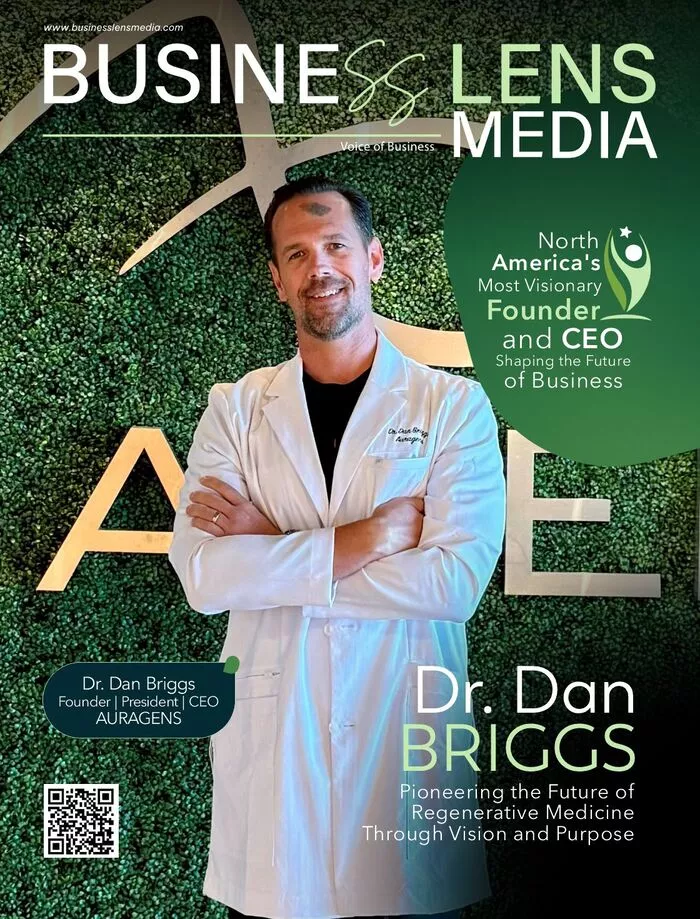
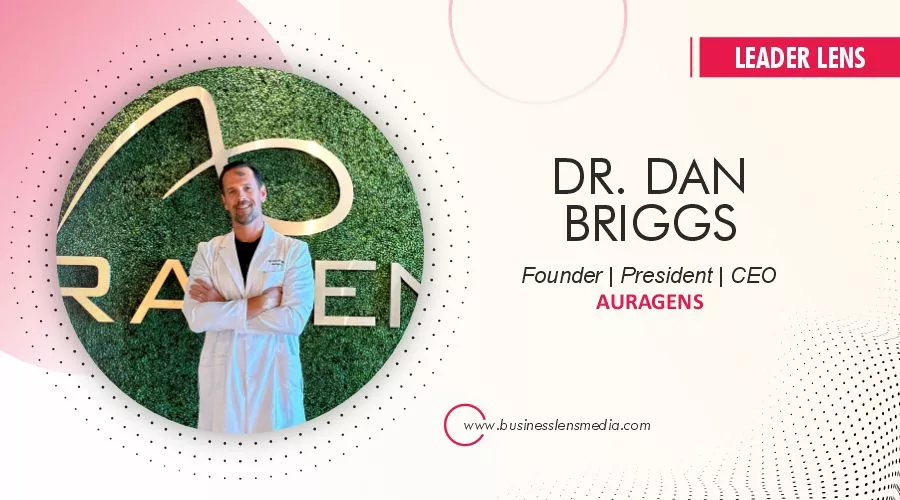
Among these forward-thinking pioneers is Dr. Dan Briggs, Founder, President, and CEO of AURAGENS, whose journey reflects a rare blend of policy insight, entrepreneurial determination, and scientific engagement. His path into regenerative healthcare did not begin in a laboratory but through firsthand exposure to the realities of healthcare policy and patient advocacy. Those early experiences revealed the systemic challenges many patients face and ultimately inspired a shift toward building solutions that prioritize both scientific rigor and human impact.
Today, through Auragens and several related healthcare initiatives, Dr. Briggs is contributing to a growing movement that seeks to redefine how medicine approaches recovery, chronic illness, and long-term wellbeing. His work represents a broader vision for healthcare, one where innovation does not merely extend treatment possibilities but restores hope and opportunity for patients navigating complex medical conditions.
Discover how vision, resilience, and science converge in Dr. Briggs’ journey to reshape the future of healthcare.
From Public Policy to Purpose-Driven Innovation
The professional journey of Dr. Dan Briggs reflects a progression shaped by observation, conviction, and a deep desire to create meaningful change within the healthcare system. Before establishing himself as a founder and leader in regenerative medicine, Dr. Briggs began his career in the fields of public policy and advocacy. Those formative years exposed him to the inner workings of healthcare systems and the distance that often exists between policy decisions and the patients whose lives they ultimately affect.
During this period, he recognized two realities that would significantly shape his future path. First, many healthcare decisions are made far removed from the patient experience. Second, genuine transformation within the healthcare system rarely occurs without individuals willing to challenge existing structures and build something new.
Through advocacy work, Dr. Briggs gained valuable insight into how healthcare systems operate, both their strengths and their shortcomings. He encountered families struggling with complex illnesses, outdated regulatory frameworks, and limited treatment options. These experiences offered a firsthand view of the systemic barriers that patients often face.
Rather than remaining in a position of observation, Dr. Briggs felt compelled to act. The lessons he absorbed from policy work ultimately influenced his transition into entrepreneurship. “Policy taught me how the world works,” he explains, “but entrepreneurship allowed me to improve it.” Entering the life sciences and regenerative medicine space allowed him to pursue solutions that combined scientific rigor with compassion for the human experience of illness.
Establishing Auragens: A Vision to Restore Possibility
When Dr. Briggs founded Auragens, his guiding vision was both simple and ambitious: healthcare should restore possibility rather than merely manage decline.
Traditional medicine often focuses on controlling symptoms or slowing the progression of disease. Regenerative medicine introduces a different paradigm, one centered on repairing and restoring biological function. Stem cells and biologic therapies offer the potential to help the body heal itself, opening new pathways for treating conditions that were once considered irreversible.
At Auragens, this vision is translated into action through three foundational pillars: scientific integrity, patient outcomes, and continuous innovation. Every aspect of the organization, from laboratory research and physician-led treatment protocols to the design of the patient experience, is guided by these principles.
Dr. Briggs recognizes that a compelling vision alone does not create transformation. “Vision is easy to write on a wall,” he says. “The real work is embedding it into culture.” Achieving this requires recruiting individuals who believe deeply in the mission and maintaining accountability to those values in daily decision-making.
Through this commitment, Auragens has positioned itself as a leader in regenerative medicine, focusing on delivering therapies that have the potential to significantly improve patients’ lives.
Breakthroughs Shaping the Future of Regenerative Medicine
From Dr. Briggs’ perspective, some of the most exciting developments in regenerative medicine stem from a deeper understanding of how cells communicate within the human body.
Stem cells possess remarkable capabilities not only because they can differentiate into various tissue types, but also because they coordinate powerful biological signaling pathways that influence healing and inflammation. These cellular interactions are increasingly recognized as key drivers of therapeutic outcomes.
In addition, advancements in cell sourcing, laboratory culture environments, and delivery techniques have expanded the possibilities for regenerative treatments. The ability to cultivate highly viable mesenchymal stem cells under controlled laboratory conditions and deliver them with precision has significantly improved outcomes across a variety of medical conditions.
Another promising frontier involves integrating regenerative therapies with precision diagnostics. As researchers gain greater insight into biomarkers, genetics, and immune system signaling, treatments can be tailored more effectively to the individual patient.
For Dr. Briggs, these developments signal a broader shift within medicine. Regenerative therapies are steadily moving from the realm of experimental promise toward practical clinical application. Yet he also recognizes that the field remains at an early stage of its potential evolution.
Leading Multiple Healthcare Initiatives with a Unified Mission
Beyond Auragens, Dr. Briggs has played a central role in several initiatives that span different areas of healthcare innovation and community engagement, including MDX Labs, The Neighborhood Clinic, and various philanthropic foundations.
Guiding organizations across diverse healthcare sectors requires a leadership philosophy grounded in clarity and collaboration. Dr. Briggs believes that founders must resist the temptation to control every operational detail. Instead, effective leadership involves setting direction, building strong teams, and creating systems that empower talented professionals to excel.
Although these initiatives address different dimensions of healthcare, from advanced regenerative research to expanding access to primary care, they share a common purpose. Each organization is built on the belief that healthcare should be both innovative and accessible.
Auragens may operate at the forefront of regenerative science, while The Neighborhood Clinic focuses on delivering essential care to underserved communities. Despite these differences, the underlying mission remains consistent: improving human health in ways that are both meaningful and measurable.
Dr. Briggs approaches leadership with a balance of discipline and optimism. The process of building organizations can be unpredictable and often chaotic. Yet maintaining perspective and occasionally finding humor within the challenges helps sustain momentum through the inevitable complexities of entrepreneurship.
Overcoming Obstacles and Building Credibility
Like many transformative ventures in healthcare, Dr. Briggs’ journey was not without significant challenges. Establishing credibility within an emerging scientific field proved to be one of the earliest hurdles.
When regenerative medicine was still gaining recognition, many observers misunderstood the science or dismissed it as premature. Convincing stakeholders of its clinical potential required persistence and evidence.
The solution, in Dr. Briggs’ view, was straightforward though far from easy. The path forward required rigorous commitment to the work itself. Laboratories had to be built, clinical expertise developed, and patient outcomes carefully documented. Maintaining high scientific and ethical standards became essential to establishing trust within the broader medical community.
During this time, Dr. Briggs also faced a deeply personal challenge that reshaped his perspective on life and leadership. At the age of twenty-one, he experienced a severe health crisis that nearly cost him his life. Such experiences can fundamentally alter how individuals perceive time, purpose, and the importance of meaningful impact.
For Dr. Briggs, that moment reinforced a powerful lesson: life is finite, and the opportunity to create positive change should never be taken lightly.
The greatest lesson he carried forward from those experiences was resilience. In many cases, the difference between success and failure lies not in the absence of obstacles but in the determination to continue moving forward when adversity arises.
Cultivating a Culture of Curiosity and Innovation
The healthcare industry evolves rapidly, influenced by scientific discovery, technological innovation, regulatory frameworks, and shifting public expectations. To remain at the forefront of such a dynamic environment, Dr. Briggs believes organizations must cultivate a culture of continuous learning.
At Auragens, research collaboration and scientific engagement are essential components of the organizational culture. Teams regularly participate in peer-reviewed research, clinical data analysis, and interdisciplinary dialogue. Internal review processes ensure that emerging therapies and technologies are carefully evaluated before being incorporated into treatment protocols.
Equally important is creating an environment where team members feel comfortable questioning assumptions and proposing new ideas. When curiosity is encouraged rather than constrained, innovation emerges organically.
Dr. Briggs also credits his personal fascination with science as a driving force behind this culture. For leaders who are genuinely curious about the discoveries shaping their field, staying ahead becomes less of a burden and more of a privilege.
Recognition as a Responsibility
Over time, the work of Dr. Briggs and his organizations has received notable recognition, including honors such as “Business of the Year” and “Stem Cell Treatment Center of the Year.” While these accolades acknowledge the progress achieved, Dr. Briggs views them primarily as reminders of responsibility rather than endpoints of success.
“When recognition arrives,” he reflects, “it simply means expectations have increased.”
Awards reinforce the importance of maintaining the highest standards in patient care, research integrity, and ethical leadership. Internally, such achievements are celebrated as the result of collective effort rather than individual accomplishment.
Dr. Briggs emphasizes that successful organizations are never built by one person alone. They are shaped by teams of individuals who share a commitment to a common mission.
At the same time, he remains focused on the future rather than past recognition. If the organization is performing its role effectively, yesterday’s awards quickly become secondary to the work of building tomorrow’s breakthroughs.
Balancing Leadership with Personal Perspective
Leading multiple medical and research initiatives naturally demands significant time and energy. Dr. Briggs approaches the idea of balance with a sense of realism and humor.
“Balance is a generous word,” he notes. “Strategic chaos is probably more accurate.”
When leaders are deeply invested in building organizations that make a difference, the boundaries between professional and personal life inevitably become fluid. Nevertheless, maintaining perspective remains essential.
Time spent with family, friends, and personal interests serves as a grounding force. These experiences provide the emotional clarity needed to sustain leadership responsibilities over the long term.
Equally important is building leadership teams capable of operating independently. Organizations cannot scale effectively if every decision requires the direct involvement of a founder. Empowering others to lead ensures both resilience and sustainability.
Ultimately, Dr. Briggs believes that perfect balance is less important than meaningful alignment. When professional efforts contribute positively to society and personal life preserves a sense of humanity, leaders are moving in the right direction.
Shaping the Future of Regenerative Healthcare
Looking toward the future, Dr. Briggs envisions a transformative era for healthcare driven by the convergence of biology, technology, and data science.
At Auragens, the next phase of development focuses on expanding research initiatives, refining clinical protocols, and building partnerships that accelerate regenerative medicine on a global scale.
Another critical objective involves increasing accessibility. Breakthrough therapies should not remain confined to a small number of specialized institutions. Over time, Dr. Briggs aims to help develop systems that allow regenerative treatments to reach broader populations while maintaining rigorous scientific standards.
He believes the coming decade will fundamentally reshape how diseases are treated. Regenerative medicine, combined with technological advancements, has the potential to redefine healthcare outcomes in once unimaginable ways.
The responsibility of organizations like Auragens, he believes, is to help guide this transformation thoughtfully and responsibly.
Advice for the Next Generation of Innovators
For aspiring entrepreneurs and leaders seeking to create meaningful impact, Dr. Briggs offers guidance drawn from his own experience.
First, he encourages innovators to focus on solving real problems. When a business genuinely improves lives, investment, growth, and recognition become natural extensions of that impact.
Second, credibility must be built through substance rather than hype. In healthcare, especially, trust emerges from transparency, evidence, and measurable results.
Third, entrepreneurs should prepare for the long journey that meaningful innovation requires. Transformative ideas rarely mature overnight. Progress often demands years of persistence, experimentation, and learning.
Finally, Dr. Briggs emphasizes the importance of maintaining perspective. “If you’re trying to change the world,” he says with a smile, “you should still be able to laugh once in a while.”
The journey of innovation can be demanding, but it is also deeply rewarding for those committed to shaping a healthier future.