The most influential leaders in real estate are rarely defined by the projects they complete alone, but by the intent that guides every decision long before ground is broken. In an industry driven by timelines, capital, and scale, it takes a distinctive mindset to look beyond immediate outcomes and consider what endures decades after the final handover. That perspective, measured, human-centered, and deeply intentional, separates those who manage developments from those who quietly shape communities.
Across years of navigating complex builds, evolving regulations, and shifting market realities, a deeper philosophy often emerges: one that recognizes development as both a technical discipline and a social responsibility. It is a philosophy rooted in understanding how people move through spaces, how neighborhoods influence daily life, and how thoughtful planning can foster connection, longevity, and trust. Leaders who adopt this broader perspective do more than just deliver structures; they safeguard experiences, reputations, and futures.
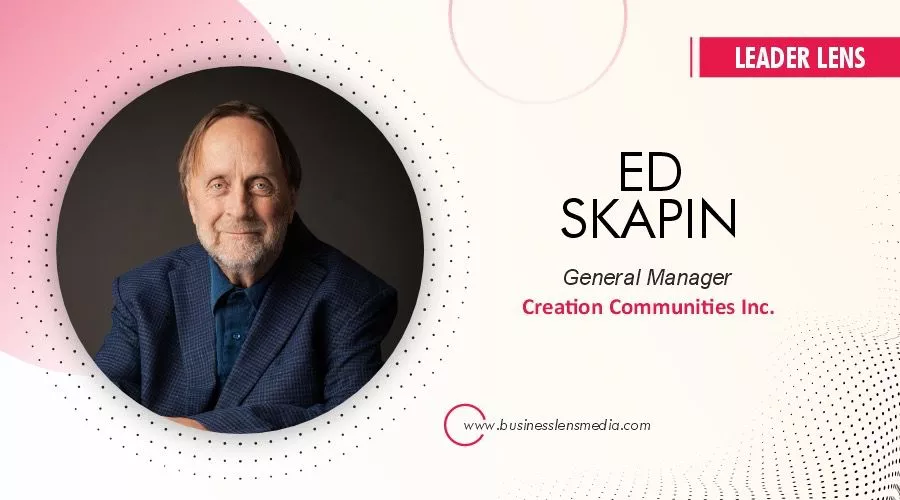
This is where Ed Skapin’s professional journey finds its meaning. As General Manager at Creation Communities Inc., his role extends beyond operational oversight into something more holistic, balancing vision with execution, discipline with empathy, and innovation with restraint. His leadership reflects an understanding that real estate, at its best, is not about speed or spectacle, but about alignment: between promise and outcome, strategy and craftsmanship, and ambition and accountability.
With decades of industry insight shaping his approach, Ed operates at the intersection of precision and stewardship, where clarity drives performance, and people remain central to every project narrative. His work quietly reinforces a simple but powerful truth: enduring communities are built when leadership values legacy as much as logistics.
Read the full profile to explore how leadership, intention, and experience converge.
From Technical Execution to Holistic Stewardship
Ed’s professional evolution mirrors the industry’s own shift. When he first stepped onto construction sites more than four decades ago, emphasis was rigidly on schedules, budgets, and deliverables. Success was measured in completion dates and fiscal precision. Over the years, however, something deeper took shape in his mind: a conviction that development must be tethered to lived experience, not just technical execution.
During his early career, the whir of machinery and the grind of deadlines defined his days. The projects were impressive in scale, but Ed saw the limitations of viewing them as isolated achievements. From those beginnings, his mindset gradually shifted. He began to see development as something not just built to last but built to live in a place where people’s everyday moments unfold, where memories are made, and where the design and placement of a street can influence connection.
With this shift, Ed’s understanding of large-scale residential and commercial development expanded into one that respects legacy as much as logistics. He now views every project as a lifetime investment in quality of life, value retention, and community resilience. “Development, in his own words, became an ‘act of stewardship,’ a responsibility to people and to the future that endures long beyond ground-breaking ceremonies.” This philosophy aligns with the broader mission of Creation Communities: to reimagine what it means to come home, to forge spaces where people flourish, and life feels intentional.
Alignment of Vision and Execution: The Heart of Leadership
At Creation Communities Inc., Ed’s leadership is defined less by authority and more by alignment. The mandate he has refined over the years hinges on synchronizing the full continuum of development: from conceptual vision to tangible delivery.
Under his stewardship, alignment isn’t a buzzword; it’s a lived discipline. It means ensuring that strategic aspirations are mirrored in operational actions, that the marketing vision matches what ultimately stands on the site, and that every milestone reflects the promise made to the homeowner. As General Manager, he orchestrates this balance with a steady hand.
This involves managing risk, enforcing quality standards, navigating compliance landscapes, and maintaining financial discipline, all while keeping team energy centered and motivated. Ed believes that clarity fuels performance. When everyone understands the why alongside the what, the project ecosystem functions more cohesively and with shared purpose. As the company values emphasize, strong communication and craftsmanship are central to creating homes people feel deeply connected to, not just structures people inhabit.
Lessons from a Multidimensional Portfolio
Ed’s experience spans a rich tapestry of real estate, consisting of single-family homes, multi-family residences, commercial spaces, mixed-use developments, retail environments, and hospitality projects. This breadth didn’t happen by chance; it was deliberate. He believes that exposure to diverse asset classes sharpens one’s ability to see the whole system rather than isolated components.
Every project type presents its own rhythm of constraints and opportunities. Residential work demands emotional sensitivity to how people live and grow; commercial projects pose technical complexities and market dynamics that shift with economic winds. Navigating these diverse arenas over decades taught Ed to evaluate trade-offs with clarity and objectivity, allowing him to act decisively without losing sight of long-term outcomes.
This systemic mindset doesn’t just inform decisions, it propels them. By seeing projects as interconnected pieces of a broader community fabric, he leads with a perspective that anticipates consequences before they arise.
The Leadership Ethos: Clarity, Trust, and Emotional Intelligence
In an industry where deadlines and budgets drive every meeting, Ed’s leadership philosophy stands out for its emphasis on human connection. For him, managing diverse project teams isn’t about command and control; it’s about creating an environment where clarity, trust, and mutual respect empower everyone to bring their best selves to the table.
He often reflects that consistency in communication, expectations, and decision-making creates psychological safety. Teams perform best not when pressure is highest, but when direction is clear, and leaders are consistent. “Emotional intelligence,” he believes, “is as vital as technical expertise”. Construction may be defined by materials and measurements, but it’s people who drive execution. Listening well, acting decisively, and building trust are competencies he values just as highly as fiscal acumen.
In a world where teams are often stretched thin, this approach fosters resilience. “People don’t just follow a leader; they contribute to a shared vision,” he added.
Facing Industry Challenges Head-On
Perhaps one of the most revealing aspects of Ed’s leadership is how he navigates persistent industry hurdles from labor shortages to supply chain volatility, regulatory complexity, and rising costs. Such challenges are not anomalies but systemic realities. Ed’s strategy is proactive rather than reactive.
Instead of chasing short-term fixes, he advocates for early engagement with stakeholders, diversified sourcing strategies, transparent communication, and rigorous project controls. This approach ensures problems are identified in their infancy rather than their crisis stage.
These operational principles align with the ethos of Creation Communities, where careful planning and a commitment to excellence are woven into the company’s DNA. The company’s vision to create homes and communities that reflect the diverse stories of their residents only holds meaning when the underlying execution framework is disciplined and resilient.
Balanced Innovation: Staying Competitive in a Changing Landscape
In an era of rapid technological advancement and evolving building standards, many leaders chase innovation for its own sake. Not Ed. For him, innovation must be practical and valuable, a means to a clearly defined end, not an end in itself. He emphasizes staying informed and engaged with regulators, suppliers, and industry bodies so that new materials, technologies, and practices are considered thoughtfully and strategically.
This selective approach to innovation ensures projects remain competitive and future-ready while avoiding the pitfalls of untested trends. It’s an approach that mirrors the company’s values of ‘excellence without ego’ and ‘professional, but personal,’ where quality is visible not because it’s flashy, but because it endures.
Recognition: A Team Outcome, Not a Personal Trophy
Ed is quick to deflect praise when accolades come Creation’s way. In his view, awards and professional recognition serve a larger purpose than mere affirmation. They broadcast a company’s competence and integrity to partners, investors, customers, and municipalities, reinforcing trust and long-term credibility.
More importantly, they reflect the collective effort of teams who often labor outside the spotlight. For Ed, recognition is a mirror that reflects more than one person’s contribution; it reflects the culture of accountability, pride, and craftsmanship that the team has cultivated.
Sustaining Performance Through Balance and Discipline
The intensity of construction leadership, the long hours, the constant recalibration of priorities, and the layers of coordination can easily lead to burnout. Ed’s response is a design of balance rather than resignation.
He emphasizes perspective and delegation. Strong teams equipped with clear priorities and shared accountability allow him to step back when needed, preserving clarity and judgment over long arcs of time. His view of balance isn’t permissive; it’s intentional. Sustained performance, he believes, isn’t about relentless motion; it’s about disciplined choice.
Looking Ahead: Building Communities That Endure
As he looks toward the future of Creation Communities Inc., Ed’s goals are deeply resonant with the company’s mission: to deliver homes and neighborhoods that are beautifully built, inclusive, and reflective of the individual stories of the people who live there.
He imagines projects that become more than addresses spaces where families find belonging, where neighbors connect easily, and where residents feel anchored by thoughtful planning and lasting design. Whether it’s a bungalow with accessible living spaces, a duplex designed for family growth, or a mixed-use community offering modern conveniences, each project represents a lived promise of comfort, longevity, and care.
This vision is not abstract. It is rooted in tangible principles, quality construction, intentional community design, and open communication from planning to final move-in.
Advice for the Next Generation of Leaders
For emerging professionals who aspire to helm large-scale developments with integrity and consistency, Ed has simple yet profound guidance: master the fundamentals, cultivate relationships with care, protect your reputation relentlessly, and lead with humility.
He reminds young leaders that large-scale development doesn’t merely shape skylines; it shapes cities and lives. That influence, he says, should be treated with respect and responsibility. Patience, humility, and an unwavering commitment to doing what’s right even when it’s difficult are the pillars of enduring success.
A Legacy Beyond Buildings
In an industry that often measures achievement in square footage and sales figures, Ed Skapin measures it in lived experiences, sustained communities, and an unshakeable belief that development at its best is a deeply human endeavor.
His leadership at Creation Communities Inc. stands at the intersection of craftsmanship, strategy, and empathy. And as the real estate landscape continues to evolve in 2026 and beyond, one thing remains clear: the future of real estate is not just about the homes we build but the lives they enable.