The most consequential leadership journeys rarely follow a straight line. They move laterally, gathering insight from seemingly unrelated disciplines before converging into something uniquely relevant for the moment at hand. In an era defined by rapid technological acceleration, the leaders who stand out are not those who simply master tools, but those who understand how systems, people, and values intersect under pressure. Their influence is felt less through declarations and more through the clarity they bring to complexity.
What makes such leaders compelling is their ability to hold contradictions without paralysis. They can speak fluently about innovation while remaining grounded in human reality. They recognize that progress is not just a technical challenge, but a cultural and emotional one. Long before artificial intelligence became a headline priority, some leaders were already immersed in the deeper questions it now forces into the open: responsibility, trust, ethics, and meaning.
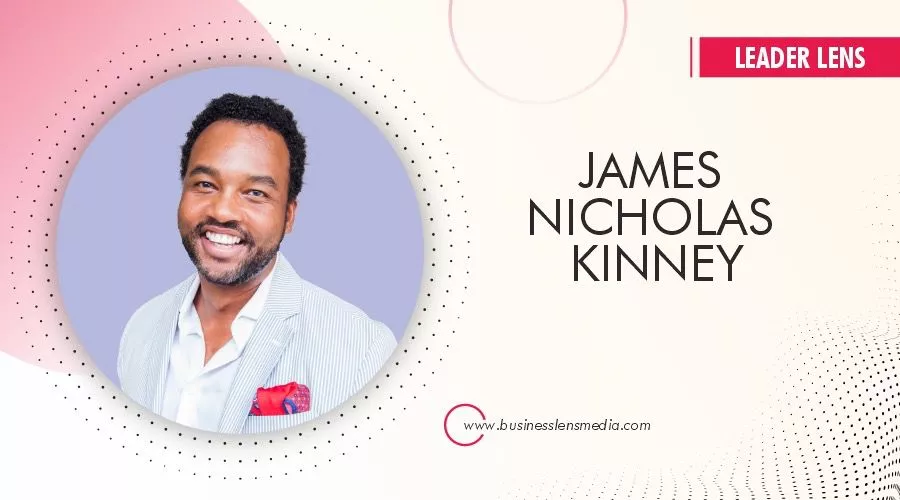
It is from this vantage point that James Nicholas Kinney, Chief AI Officer at INVNT Marathoner Company, Speaker and Author, has emerged as a voice worth close attention. His work reflects a career shaped by movement across leadership development, organizational culture, data strategy, and intelligent systems, not as isolated functions, but as interdependent forces. Rather than tre ating AI as an endpoint, his perspective frames it as a mirror, one that reveals the maturity, or fragility, of the structures and decisions behind it.
As organizations rush to adopt increasingly powerful technologies, Kinney’s approach offers a different kind of orientation. It suggests that the defining challenge of this decade is not speed, but coherence. Not scale, but stewardship. And not intelligence alone, but clarity, applied with discipline and care.
Step inside the thinking shaping America’s most human-centered approach to AI leadership.
Walking Between Worlds: The Making of a Modern AI Leader
James Nicholas Kinney’s professional path did not begin in the world of algorithms or intelligent systems. It began in environments where leadership was tested in far more human ways through conversations about trust, alignment, resilience, and change. His early work focused on leadership development, organizational culture, and executive performance, placing him alongside leaders navigating uncertainty long before artificial intelligence entered strategic discourse.
In those settings, he worked closely with individuals confronting complexity without clear answers. Fear, ambition, identity, and responsibility were not abstract concepts but daily realities shaping decisions and outcomes. Observing these dynamics over time gave Kinney a durable insight: the behaviors leaders avoid, the values they clarify, and the tensions they leave unresolved inevitably surface in the systems they build.
As his career expanded into data platforms and AI strategy, that insight did not diminish, but it sharpened. The shift revealed that the most consequential challenges surrounding intelligent systems were rarely technical. They were interpretive and ethical, rooted in how leaders understood their role, their people, and the consequences of delegation to machines. This realization reframed his work, positioning him not as a technologist first, but as a guide helping organizations make sense of what AI was beginning to change beneath the surface.
It was from this vantage point that Kinney’s now well-known conviction emerged: “Technology never changes people. It amplifies them.” The statement reflects years of observing how clarity or confusion, intention or avoidance, maturity or fear become embedded in systems at scale.
From there, his role evolved naturally into one of translation, bridging
- What technology makes possible.
- What organizations are structurally prepared to support.
- What humans are psychologically ready to accept.
That intersection, rather than the technology itself, would come to define his approach to leadership in the age of intelligent systems.
Stewardship Over Silos at INVNT Marathoner
In his role at INVNT Marathoner, Kinney resists the temptation to divide his responsibilities into neat categories. AI strategy, data governance, and people leadership are not treated as separate mandates competing for attention. He views them as three expressions of a single responsibility: stewardship.
He has seen what happens when these elements fall out of alignment. An AI strategy pursued without governance can quickly become dangerous, introducing risk faster than organizations can recognize it. Governance implemented without a human context becomes brittle, more concerned with control than with learning. People leadership without systems, meanwhile, remains fragile, dependent on individual heroics rather than sustainable design.
His work, therefore, is about coherence. Every AI initiative at INVNT begins not with deployment, but with inquiry:
- What problem is truly being solved?
- What behaviors will this system change or reinforce?
- What risks, technical, ethical, or cultural, does it introduce?
These questions are not procedural hurdles; they are orienting mechanisms.
Kinney often describes strategy as the act of setting direction, governance as defining boundaries, and leadership as creating meaning. At INVNT, AI is not positioned as a feature layered onto existing operations. It is embedded as an operating principle. That level of integration demands trust, and trust cannot be manufactured through speed alone.
Trust, he believes, grows from transparency. Transparency depends on clarity. And clarity often requires slowing down just enough to ask better questions before accelerating execution. For Kinney, balance is not about allocating hours across competing priorities. It is about sequencing. Purpose comes first. Careful design follows. Governance is applied with humility. Execution is carried out with discipline.
Clarity as the New Intelligence
When asked to define effective leadership in an AI-driven organization, Kinney does not point to technical expertise or cognitive brilliance. He points to clarity. Clarity of intent. Clarity of values. Clarity around trade-offs. Clarity about responsibility.
As tools become more powerful, leadership must provide moral and strategic orientation. People do not need leaders who claim to have every answer. They need leaders who can frame the right questions, hold complexity without panic, and make decisions that honor both data and humanity.
In an AI-driven organization, leadership shifts away from control and toward coherence. The task is no longer to manage every variable, but to align technology, culture, incentives, and ethics into a system that people can understand and trust. When that coherence is absent, no amount of intelligence compensates for confusion.
The Emotional Reality of AI Adoption
Across industries, the most persistent challenge Kinney encounters is not technical readiness. It is emotional readiness. Beneath conversations about efficiency, productivity, and transformation lies a quieter, more human anxiety. Fear of irrelevance. Fear of replacement. Fear of losing control, or losing meaning.
Organizations often speak the language of innovation, but people experience change as loss before they experience it as opportunity. For this reason, Kinney approaches AI adoption not as a rollout, but as a transition. And transitions, he knows, require more than technical planning.
They require acknowledgment. They require pacing. They require dignity.
Before explaining what a system will do, he makes space to name what people are feeling. That act alone can transform the atmosphere. Psychological safety emerges not from reassurance, but from recognition. When people feel seen, they become more willing to learn, experiment, and adapt.
For Kinney, clarity is born of honesty. Compassion comes from presence. Neither is sufficient without the other.
Building for the Long Term
To ensure relevance and ethical alignment, Kinney treats AI as infrastructure rather than innovation theater. Infrastructure carries a different set of expectations. It must be reliable, resilient, accountable, and maintained over time. It forces leaders to think beyond short-term wins and align systems with core business priorities and societal values.
Ethics, in this framework, is not an afterthought. It is embedded into the design. Questions of bias, privacy, agency, and unintended consequences are addressed at the beginning of the process, not after failures occur. This approach may slow initial momentum, but it dramatically increases long-term trust.
As Kinney often emphasizes, “The future is not built by those who move fastest, but by those who build responsibly.”
Recognition as a Platform, Not a Prize
Industry recognition, at this stage of his career, evokes a complex response. Gratitude, certainly, but also responsibility. Kinney does not see recognition as validation. He sees it as visibility. And visibility, he believes, creates obligation.
That obligation is to influence the conversation in healthier directions. To humanize technology rather than mystify it. To reduce fear rather than amplify hype. To bring nuance into a space that often rewards extremes and oversimplification.
Recognition, in his view, is not about being elevated above others. It is about being entrusted with a wider audience and using that reach with care.
Making Sense of Complexity
When translating complex AI concepts for senior leaders, Kinney rarely begins with technical explanations. He starts with consequences. What decisions will change? What behaviors will be reinforced? What risks will emerge?
Metaphor, story, and lived impact become his tools. Leaders, he has learned, do not suffer from a lack of information. They suffer from a lack of orientation. His role is to help them see where they are standing before asking them to move.
The Discipline of Personal Balance
Despite the intensity of his work, Kinney remains grounded in a simple conviction: no professional success compensates for personal emptiness. He protects time for reflection, movement, relationships, and stillness, not as indulgences, but as necessities.
These practices, he believes, form the foundation of sustainable leadership. Without them, clarity erodes, and reactivity takes over.
Looking Toward 2026 and Beyond
As he looks to 2026 and the years that follow, Kinney’s ambitions are not centered on scale or dominance. They are centered on normalization. He hopes to help establish a model of leadership that is both technologically fluent and emotionally mature.
He wants organizations to build AI systems that increase trust, not just efficiency. He wants leaders to become more human, not less, in the presence of increasingly powerful machines.
Counsel for the Next Generation
His advice to emerging leaders is deceptively simple. Learn systems. Learn people. Learn yourself.
Do not chase relevance; build depth. Do not chase scale; build integrity. Do not chase certainty; build the capacity to live with ambiguity.
In Kinney’s view, the future belongs to leaders who can hold power with humility, complexity with calm, and responsibility with grace.
A Revolution of Meaning
Ultimately, Kinney believes we are not living through a technology revolution alone. We are living through a meaning revolution. AI is forcing leaders to confront deeper questions about what matters, what lasts, and who they choose to become when tools grow more powerful than tradition.
He hopes to help shape a future where technology serves humanity, rather than the other way around. That, to him, is the work. The responsibility. And the defining opportunity of this moment.