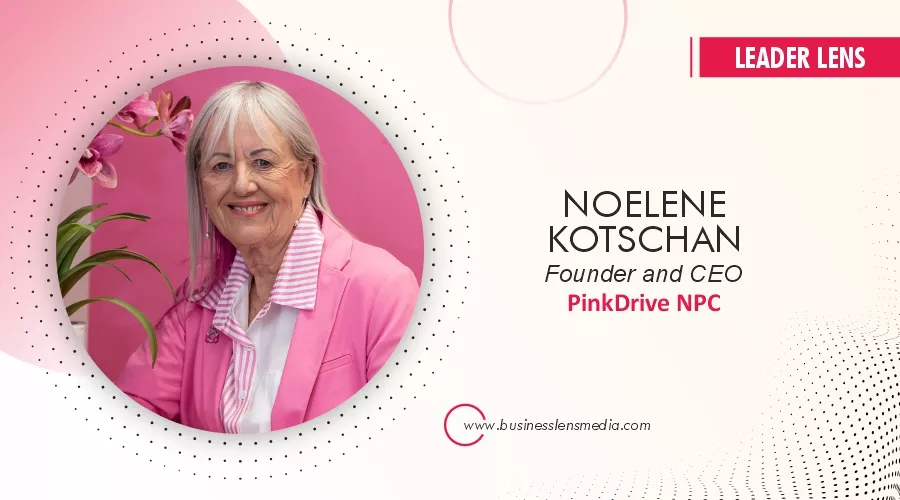
By Noelene Kotschan, Founder and CEO of PinkDrive NPC
Noelene Kotschan is the Founder and CEO of PinkDrive NPC, a leading South African public benefit organisation advancing cancer awareness, early detection, screening and patient support. Since founding PinkDrive in 2009, she has transformed it into a nationally respected mobile healthcare organisation, bringing free breast, cervical and prostate cancer screening and health education to underserved and medically uninsured communities across South Africa.
With expertise in executive leadership, strategic partnerships, stakeholder engagement, resource mobilisation and organisational development, Noelene has built impactful collaborations across government, healthcare, corporate and international sectors.
Her leadership has earned significant international recognition, including Social Impact Influencer of the Year (NPO) at FLUXX Doha (2025), Global Pioneer Excellence Award in Social Impact and Cancer Awareness at FLUXX Manila (2026), Women’s Health Champion at the LOSD Excellence Awards, Saïd Business School, Oxford (2026), Global Healthcare Impact Award for Cancer Awareness and Early Detection (2026), CSI Legacy Awards Johannesburg – Best NGO (2026).
She remains committed to advancing equitable healthcare and patient-centred cancer care.
One of the greatest challenges facing healthcare in South Africa today is not simply the availability of medical knowledge or technology but ensuring that this knowledge and technology reach the people who need them most.
As Founder and CEO of PinkDrive, I have spent many years advocating for equitable access to cancer education, screening and early detection. Our experience has reinforced a fundamental belief: where a person lives, what they earn, or whether they have medical aid should not determine their opportunity to access potentially life-saving healthcare.
Cancer remains a significant public health challenge, and one of the most important opportunities we have to improve outcomes lies in strengthening awareness, encouraging timely screening and reducing the barriers that prevent people from seeking medical attention.
Taking healthcare to the communities that need it most
Traditional healthcare models often require patients to travel considerable distances to reach medical facilities. For people living in rural communities, informal settlements and economically disadvantaged areas, transport costs, lost income, limited healthcare infrastructure and a lack of information can create formidable obstacles.
Mobile healthcare offers a practical and impactful way of addressing some of these challenges. At PinkDrive, our mobile mammography and health units take screening services and cancer education directly into communities, bringing healthcare closer to people who might otherwise struggle to access it.
Our approach extends beyond providing medical services. We believe education is equally important. People need to understand the value of early detection, recognise potential warning signs and feel empowered to seek medical assistance without fear, stigma or embarrassment.
Early detection does not guarantee a positive outcome in every case, but it can create opportunities for earlier diagnosis and more timely treatment. In cancer care, that opportunity matters enormously.
Innovation must be measured by its impact on people
Healthcare innovation is frequently associated with sophisticated equipment, artificial intelligence, digital platforms and advanced diagnostic technologies. These developments have considerable potential to strengthen healthcare systems. However, innovation should not be measured solely by technological advancement. We must also ask whether it is making healthcare more accessible, affordable and responsive to the needs of patients.
Mobile screening technology demonstrates how innovation can be applied in a practical, communitycentred way. By taking services to underserved populations, we can begin addressing geographical barriers and creating opportunities for people to engage with healthcare earlier.
Technology, however, cannot replace human connection. Compassionate communication, culturally appropriate education and respectful engagement remain essential to building trust. We must ensure that innovation supports the patient rather than allowing the patient to become lost within the system.
Partnerships are essential for sustainable change
No single organisation can address the cancer burden alone. Sustainable progress requires collaboration between government, healthcare professionals, non-profit organisations, corporates and local communities.
At PinkDrive, partnerships help us mobilise resources, extend our reach and deliver services where they are needed. Corporate social investment can play a particularly valuable role when it is aligned with measurable community needs and long-term impact.
I believe we must move beyond simply counting events or people reached. We should also consider whether education changes behaviour, whether screening leads to appropriate referral and followup, and whether our interventions contribute to better access to care.
Accountability to our funders is important, but our greatest responsibility is to the communities we serve.
Leadership with purpose: turning awareness into action
My journey has taught me that meaningful leadership is not defined solely by titles, recognition or organisational growth. It is defined by the difference we make in the lives of others.
The future of cancer care depends on our collective willingness to challenge existing barriers, embrace appropriate innovation and place people at the centre of every decision. It also requires sustained investment in prevention, early detection, education and patient navigation, so that individuals are supported beyond their initial screening.
At PinkDrive, our founding principle remains relevant today: early detection will help prolong a life.
Ultimately, progress will be measured not by how advanced our technology becomes, but by how many more people can access the care, knowledge and support they deserve. We must build a future in which early detection is not a privilege for the few, but an accessible opportunity for all.