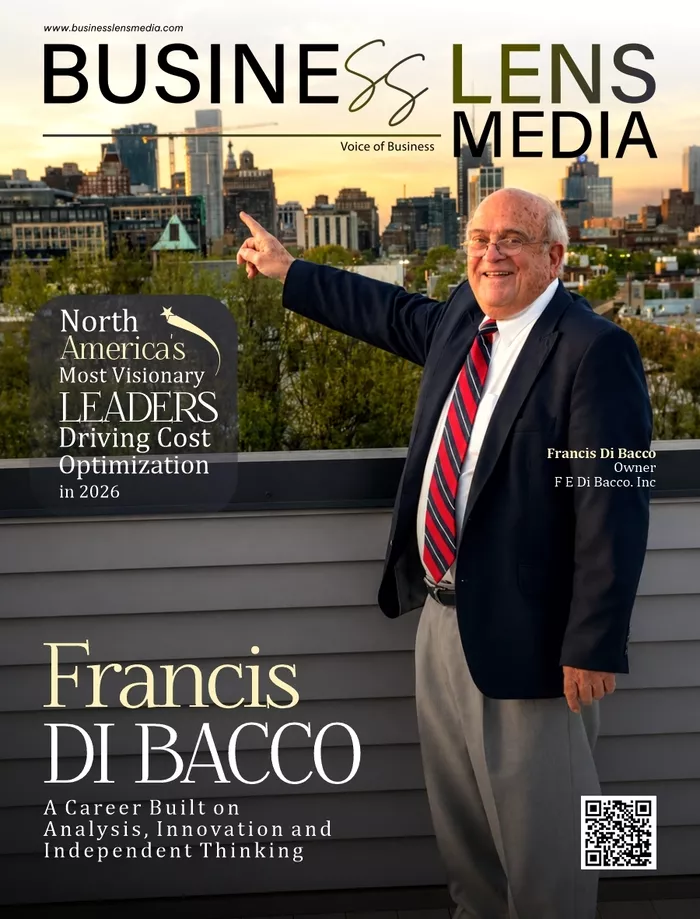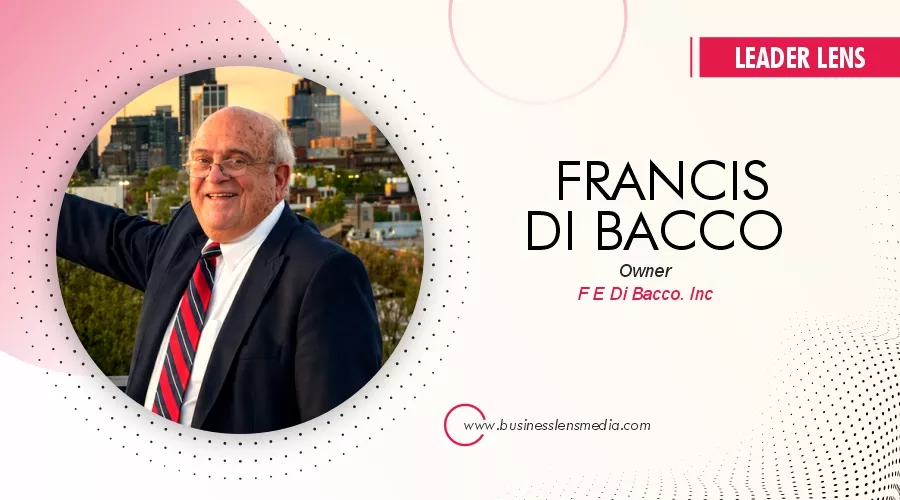
Some careers are defined by a single profession. Others are shaped by an ongoing willingness to explore new ideas, solve practical problems, and build upon experience. Francis Di Bacco’s professional life reflects the latter. Over more than seven decades, he has established a career spanning banking, financial consulting, invention, entrepreneurship, historical preservation and creative writing. Although each pursuit differed in purpose, all were driven by the same qualities: curiosity, careful analysis, and an interest in creating practical solutions.
As the Founder of F.E. DiBacco, Inc., Fran has dedicated nearly five decades to helping organizations better understand banking costs through independent fee analysis and objective consulting. His work includes the development of a patented analytical system, decades of specialized banking research, and consulting engagements with businesses and financial institutions throughout the United States. Beyond banking, his entrepreneurial ventures have included writing more than 10,000 original jokes, building a successful birth-week magazine business that evolved into the Vintage Magazine Nostalgia Center, and leading historical and patriotic projects that preserve important aspects of American culture.
Rather than viewing these accomplishments as separate chapters, Fran sees them as expressions of the same mindset. Whether analyzing bank fees, organizing thousands of joke cards, developing new business concepts, or preserving historical collections, each endeavor reflects a lifelong commitment to observation, organization, and continuous learning.
Learning Banking Before the Digital Age
Fran entered the banking industry in 1956, shortly before computers became part of everyday financial operations. Banking at that time depended almost entirely on manual processes, detailed recordkeeping, and personal relationships. Every transaction required precision, and every decision relied on professional judgment rather than automated systems.
These early experiences provided him with a practical understanding of banking operations from the ground up. During his twenty-one years working within financial institutions, he gained firsthand exposure to commercial banking, customer service, and treasury-related functions. Equally important, he developed operational processes that played an essential role in the cost of banking services.
As technology gradually transformed the financial industry, Fran recognized that while tools and systems would continue to change, the underlying principles of sound financial management remained largely unchanged. Understanding how banks structured their services and how businesses interacted with those services would become the foundation of his consulting work.
From Banking Professional to Independent Consultant
In 1977, after more than two decades in banking, Fran left his position as VP and CFO and decided to use his banking knowledge in a different capacity by consulting, initially working with small and medium-sized banks and savings institutions.
For more than 14 years, he consulted with over 250 banks and savings institutions, helping them evaluate operations and reduce unnecessary expenses. This experience allowed him to view banking from both the provider’s and the client’s perspective.
In 1991, F E Di Bacco switched from consulting for banks and focused only on
Non-banks, which is what F.E.D. has done for the past 35 years. Many clients have paid multi-millions in bank fees. F.E.D. offers only one service: reviewing bank fees.
We help businesses understand how banking services are priced and identify opportunities to improve cost efficiency through an objective analysis.
F.E.D’s independence became one of its defining characteristics. It neither represents banks nor markets financial products or software. Instead, every engagement is designed to provide organizations with an objective assessment of their banking relationships, enabling informed decisions based on data rather than assumptions.
Developing a Specialized Approach to Cost Analysis
As banking products became more sophisticated and treasury services expanded, Fran observed that fee structures were growing increasingly difficult for businesses to interpret.
To address this complexity, he spent years refining a systematic approach to analyzing bank charges. That work ultimately led to the development of an automated analytical methodology that standardized banking data and allowed businesses to evaluate service charges more effectively.
The research culminated in the issuance of U.S. Patent No. 6,988,084 B1, titled “Automated System for Analyzing Charges and Credits of Banks and Other Financial Institutions,” on January 17, 2006. The patented system introduced a structured process for translating bank service charges into standardized descriptions, comparing them against historical data and leading to Price Concessions.
Rather than viewing the patent as the conclusion of his research, Fran continued refining his methodologies as banking technology evolved. His work reflected a long-standing commitment to developing Methodologies that would reveal unfair charges, which is the essence of the second patent F.E.D. has requested in 2025.
Recognition During a Defining Period in Banking
Fran’s expertise also gained recognition during one of the most significant periods in modern American banking history.
In 1991, amid the Savings and Loan crisis and the formation of the Resolution Trust Corporation (RTC), he shared recommendations concerning the challenges facing failed financial institutions and the broader banking system. His observations attracted the attention of Henry B. Gonzalez, Chairman of the U.S. House Banking Committee.
In a letter dated May 9, 1991, Chairman Gonzalez thanked Fran for his interest in assisting the Resolution Trust Corporation, acknowledged the value of his ideas, and invited him to provide additional recommendations to the Banking Committee staff in Washington for further consideration. The correspondence also encouraged him to communicate directly with the RTC to share suggestions for improving its operations.
The invitation reflected recognition of Fran’s practical knowledge during a period of significant change within the financial industry. Rather than limiting his expertise to private consulting engagements, he was allowed to contribute ideas to broader discussions surrounding banking reform and institutional efficiency.
These experiences further reinforced the approach that would continue to define his career: combining industry knowledge with independent analysis to address complex financial challenges through practical, research-driven solutions.
Applying Experience Beyond Banking
While banking remained the foundation of Fran Di Bacco’s career, his work eventually extended into a highly specialized consulting practice focused on helping organizations better understand one of their most overlooked operating expenses. The monthly bank analysis statement for services provided is an operating expense many organizations routinely process without detailed review.
Through F.E. DiBacco, Inc., he worked with businesses reviewing the fees that have changed over many years. His approach was based on the belief that organizations could make better decisions with the assistance of banking experts rather than assumptions or routine practices.
Instead of the bank fee analysis being a one-time review, Fran has encouraged clients to view it as part of their broader financial management strategy. He believes periodic reviews are essential to ensure that banking services, pricing, and fee structures remain aligned with an organization’s changing needs.
Throughout the years, his consulting work helped organizations identify unnecessary banking expenses. The emphasis was not simply on reducing costs but on understanding how banking services were being used and whether those services were needed.
His long-standing specialization in this field has enabled F.E.D. to build an extensive database of over 15,000 monthly bank bills dating back to the mid-1990s, allowing recommendations to be supported by documented banking data and actual pricing practices observed over many years.
Over nearly five decades of consulting, Fran has met with well over 1,000 financial institutions and commercial organizations, continually expanding one of the industry’s largest independent collections of commercial bank fee analyses. The historical database developed through these engagements has strengthened the firm’s ability to compare pricing practices, identify trends, and provide recommendations supported by decades of documented banking data rather than isolated observations.
A Creative Mind Beyond the Financial World
Although Fran became known professionally for his work in banking and consulting, another chapter of his career reflected a different kind of creativity.
Before entering consulting in 1977, he operated a side business writing original jokes for disc jockeys across the United States. Between 1970 and 1975, he produced 75 jokes every two weeks, eventually writing more than 10,000 original jokes. Long before personal computers became commonplace, every joke was typed, categorized by subject, and filed manually on index cards in a six-drawer filing cabinet, creating an extensive reference system that allowed him to organize and retrieve material efficiently.
His work attracted the attention of several entertainers, including comedian Rodney Dangerfield, who purchased one of Fran’s dentist jokes for $25. In a letter accompanying the payment, Dangerfield explained that he planned to use the joke during an appearance on The Tonight Show Starring Johnny Carson. When the joke was later performed on national television, Johnny Carson singled it out during the broadcast, creating one of the most memorable moments of Fran’s writing career.
Although comedy writing eventually gave way to consulting, Fran has often reflected that the experience taught him lessons that extended well beyond entertainment. Developing thousands of jokes required observation, organization, and the ability to look at familiar situations from unexpected perspectives qualities that later influenced his analytical approach to banking and cost management.
With characteristic humor, he notes that Rodney Dangerfield never purchased another one of his jokes and jokes that he “was probably destined to become a bank consultant.” Looking back, however, he believes the creativity developed during those years became an important asset throughout the rest of his professional life.
Preserving American History Through Print
Outside his professional work, Fran has devoted decades to preserving American history through the Vintage Magazine Nostalgia Center, a project that began as a business venture and gradually evolved into an educational resource.
The idea originated in the early 1980s after he discovered a copy of Life Magazine published during the week of his birth, September 20, 1937. Realizing that many people would enjoy owning a magazine from the week they were born, he established a mail-order business offering birth-week magazines through national catalog companies. Over the following six years, the business generated more than half a million dollars in sales. Rather than spending the proceeds elsewhere, Fran reinvested them into expanding his inventory, steadily building one of the country’s largest private magazine collections.
In the early 1990s, following the tragic loss of his wife, he chose to step away from the magazine business to devote more time to raising his three daughters. During that period, he sold the building that housed the collection and closed an old-fashioned ice cream parlor he had also created, while continuing his banking consulting practice across several states.
Relocating the collection presented a significant logistical challenge. To preserve every publication in chronological order, Fran purchased more than 1,600 milk crates, carefully organizing each magazine by year, month, and week before moving them to storage. Over multiple relocations spanning many years, the collection eventually grew to more than 137,000 magazines, weighing approximately 26 tons and occupying nearly one mile of shelving.
In 2019, he transformed the collection into the Vintage Magazine Nostalgia Center, housed within approximately 10,000 square feet of exhibit space. Rather than presenting magazines as collectibles, the Center recreates each decade of the twentieth century through magazine covers, advertisements, photographs, posters, and period music, allowing visitors to experience the social, cultural, and historical changes that shaped everyday American life.
As visitors toured the exhibits, Fran recognized that the collection had become much more than a commercial venture. It had evolved into an educational experience that demonstrates how magazines documented the values, interests, and aspirations of each generation. Today, the Vintage Magazine Nostalgia Center serves as both a historical archive and a unique way of preserving twentieth-century American culture for future generations.
Patriotism and Community Engagement
Fran’s interests have also included projects honoring American history, military service, and civic pride.
Among them is the Spirit of ’76 Eldorado, a customized 1976 Cadillac Eldorado dedicated to all veterans who are serving or have served their country, and especially to those who made the ultimate sacrifice. At the heart of the tribute is Fran’s oldest brother, Vincent Joseph Di Bacco, a 20-year-old U.S. Navy sailor who was killed during the Battle of Midway in June 1942. Buried at sea, Vincent never returned to the country he served. Fran was just four and a half years old when he witnessed his mother receive the telegram informing the family of his brother’s death, a moment he has said remained vividly etched in his memory throughout his life. The Spirit of ’76 Eldorado became his way of honoring his brother’s sacrifice and ensuring that his memory, along with the service of countless other veterans, continues to be recognized.
Since 2012, the vehicle has appeared in Veterans Day celebrations, patriotic parades, and commemorative events in New York City, Washington, D.C., Philadelphia, Annapolis, Atlantic City, and numerous other communities across the country.
One particularly memorable appearance came in 2019, when the Spirit of ’76 Eldorado escorted Apollo 11 astronaut Buzz Aldrin as Grand Marshal of the New York City Veterans Day Parade, marking nearly fifty years after the historic lunar landing. For Fran, participating in these events represents another way of preserving history, not through printed publications, but by honoring the individuals and milestones that have shaped the nation.
Like his work with the Vintage Magazine Nostalgia Center, these efforts reflect a long-standing commitment to ensuring that important stories continue to be remembered and shared with future generations.
A Career Defined by Curiosity and Independent Thought
Looking across more than seven decades, Fran’s career cannot be defined by a single profession or accomplishment. Banking provided the foundation, while consulting, invention, entrepreneurship, historical preservation, and creative pursuits each contributed to a broader body of work built on observation, research, and independent thinking.
Whether developing patented analytical methodologies, advising organizations on banking efficiency, contributing ideas during a pivotal period in the financial industry, writing more than 10,000 original jokes, preserving over 137,000 vintage magazines, or participating in patriotic events across the country, he has consistently approached new opportunities with curiosity and a willingness to look beyond conventional solutions.
His professional journey also reflects the value of specialization balanced with lifelong learning. While developing deep expertise in banking cost analysis, he remained open to ventures that expanded his knowledge, challenged his creativity, and served broader educational and community purposes.
Taken together, these experiences illustrate a career shaped not by a single achievement, but by a continuing desire to learn, create, and preserve. From banking and consulting to historical preservation and entrepreneurship, each chapter reflects the same enduring principles of discipline, innovation, and independent thought that have guided Fran’s work for more than seventy years.